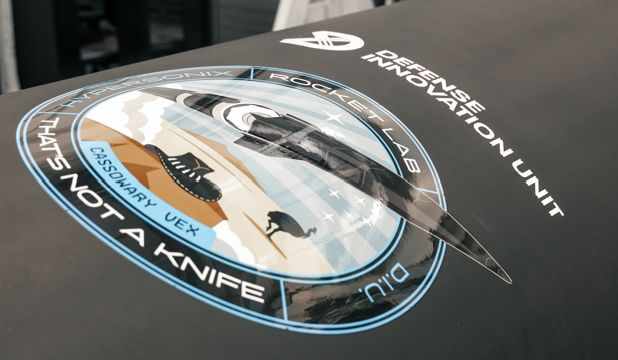
Defense Innovation Unit’s High-Cadence Airborne Testing Capabilities (HyCAT) program tackles ‘national bottleneck’ in hypersonics testing by delivering low-cost, high-cadence flight testing, pioneering a rapid, commercial acquisition model for emerging technologies.
By Devon Bistarkey, Defense Innovation Unit
In a significant advancement within the hypersonic community, Defense Innovation Unit (DIU) and its partners completed a suborbital launch of a fully integrated hypersonic test platform capable of sustained, maneuverable flight at speeds exceeding Mach 5. The mission, named Cassowary Vex, took place at NASA’s Wallops Flight Facility in Virginia on February, 27, 2026 at 7:00 p.m. Eastern Time.
This achievement underscores U.S. technology leadership in hypersonics, demonstrates the power of commercial partnerships, and highlights the Department of War’s (DOW) ability to move from funding to flight rapidly.
Addressing the Hypersonic Testing Bottleneck
Cassowary Vex represents a critical milestone within DIU’s Hypersonic and High-Cadence Airborne Testing Capabilities (HyCAT) program. Launched in early 2023, HyCAT is accelerating the development, evaluation, and transition of new emerging hypersonic technologies and providers, through low-cost, responsive, and long-endurance flight testing.
The Department is currently advancing 70 hypersonic programs – however, progress faces a ‘national bottleneck’ due to a lack of affordable, reusable, and high-cadence test platforms. Detailed in a recent report to Congress, wind tunnel testing, while valuable, is reaching capacity, underscoring the urgent need for alternative testing solutions.
HyCAT directly addresses this challenge by prototyping cost effective, commercially-derived airborne testing systems. This enables the rapid evaluation of emerging technologies and accelerates the delivery of advanced capabilities for the warfighter.
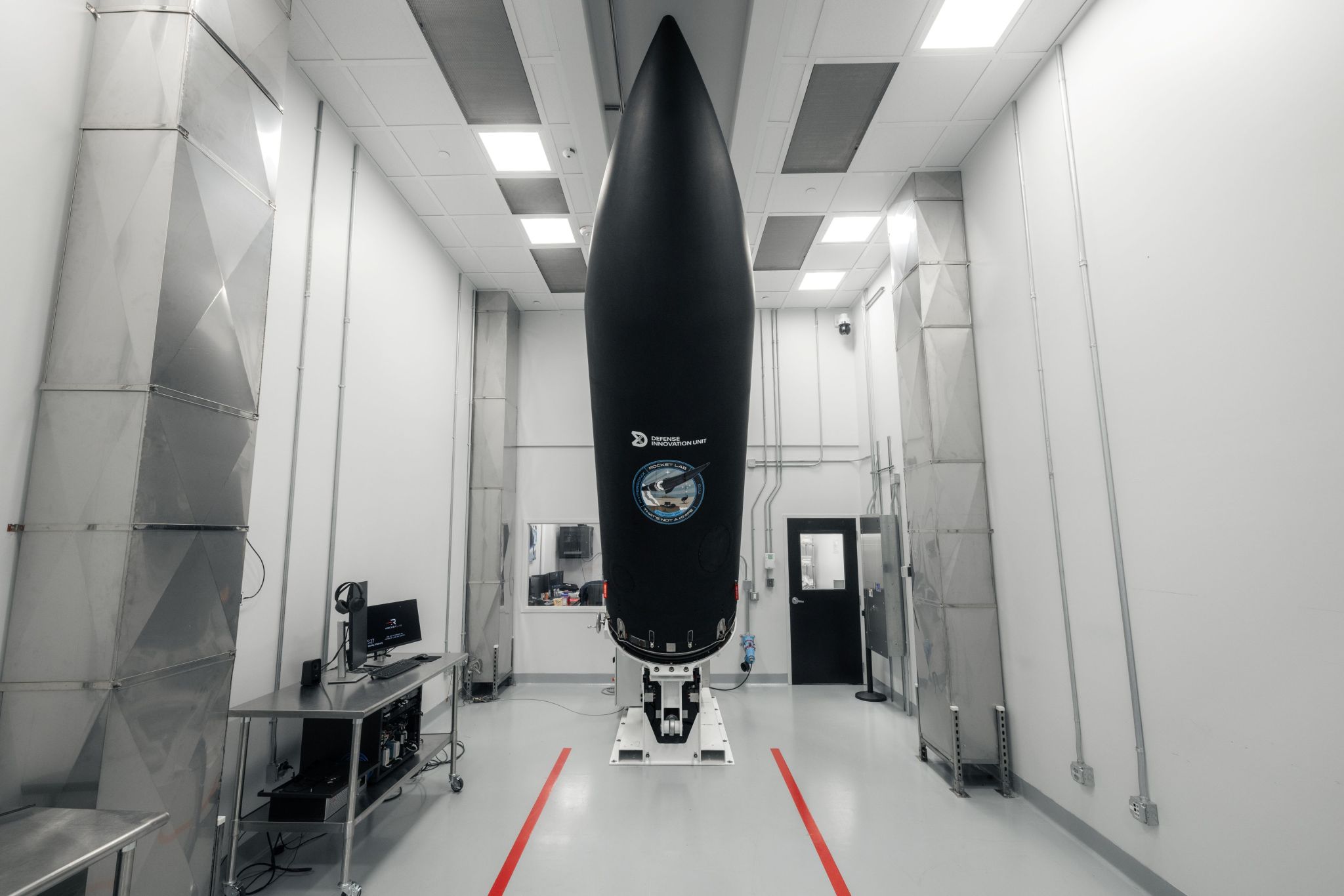
Cassowary Vex represents a critical milestone within DIU’s Hypersonic and High-Cadence Airborne Testing Capabilities (HyCAT) program.
Hypersonics as a Critical Technology Area
Recognizing its strategic importance, the DOW designated Scaled Hypersonics (SHY) as one of the six newly refined critical technology areas. This focus, announced on November 17 by the Under Secretary of Defense for Research and Engineering and Chief Technology Officer for the Department of War, underscores the vital role hypersonics play in maintaining American military superiority.
Cassowary Mission Architecture: Combining Key HyCAT Efforts
The Cassowary Vex Mission architecture integrated two primary elements of the HyCAT program: air breathing testbeds and commercial suborbital launch systems. This approach successfully demonstrated the ability to inject a sub orbital payload at precise speeds and altitudes, enabling rigorous performance validation in a representative high-dynamic-pressure environment.
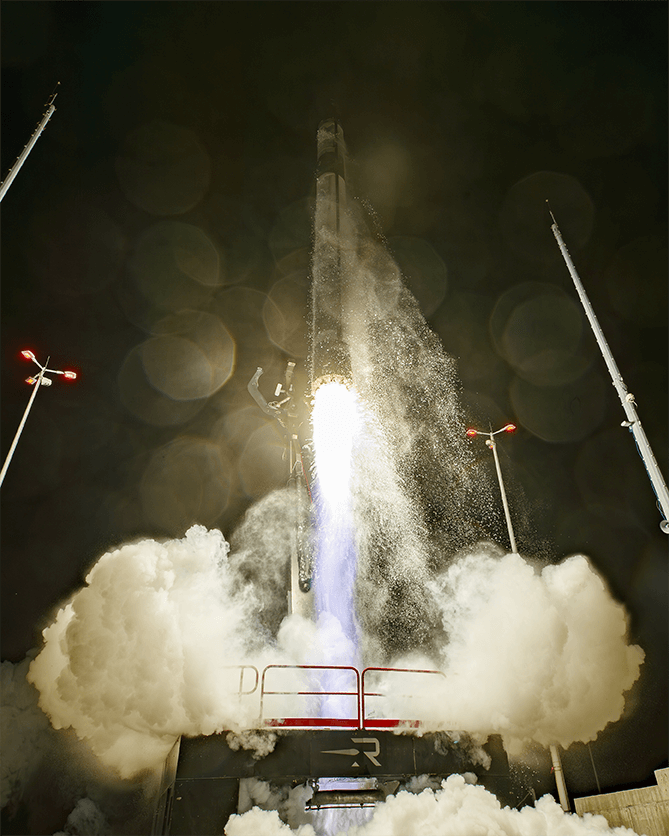
(Rocket Lab)
The mission leveraged a modified Hypersonic Accelerator Suborbital Test Electron (HASTE) launch vehicle from Rocket Lab. This modification included an extended fairing – a newly prototyped aerodynamic structure to reduce drag, designed with a unique thermal protection and separation system – to enable payload release at low altitudes; a capability unique for air breathing propulsion systems. Additionally, the mission collected critical telemetry on the propulsion system, the flight vehicle, and real-time trajectory data to compare against simulated flight models.
The launch included Hypersonix’s DART AE (Additive Engineering) payload, a three-meter-long, single-use, high-temperature alloy, gaseous hydrogen-fuelled, scramjet technology demonstrator. As the world’s first entirely 3D-printed airframe of a hypersonic launch platform in high temperature alloys, the DART’s additive manufacturing production supports mission scalability. The developed, tested, verified and demonstrated additive manufacturing structural component designs and processes can now enable the supply chain behind Hypersonix to rapidly produce and deliver DART structural flight components, significantly increasing the availability rate of flight test vehicles.
Commercial Partnerships and Rapid Execution
This mission success demonstrated the value of a flexible commercial partnership model involving multiple providers, including an international startup. Pioneering a novel acquisition strategy not only enabled program goals, but ensured organic collaboration essential for this first-of-its-kind mission between the launch service provider and the payload provider.
For example, the Rocketlab Mission 1 contract, awarded on September 29, 2023, with kickoff completed by November 2023, launching in just over 29 months from the initial award, which is a testament to the project's current velocity. This effort including Rocket Lab and Hypersonix contracts, initiated on March 3, 2023, and launched into action with a kickoff by March 14, 2023, presented an opportunity to push this further, as its timeline from kickoff, developing, building the DART flyer, to launch in less than 36 months. Typical missions of similar complexity have taken 8 or more years using the traditional acquisition approaches.
“Accessing the commercial and non-traditional ecosystem is a key enabler to accelerating progress in the hypersonics community of interest, particularly for closing mission timelines and driving towards mass and affordability,” said Lt. Col. Nicholas Estep Emerging Technologies Portfolio Director, Defense Innovation Unit.
DIU’s Role in Bridging Defense and Technology
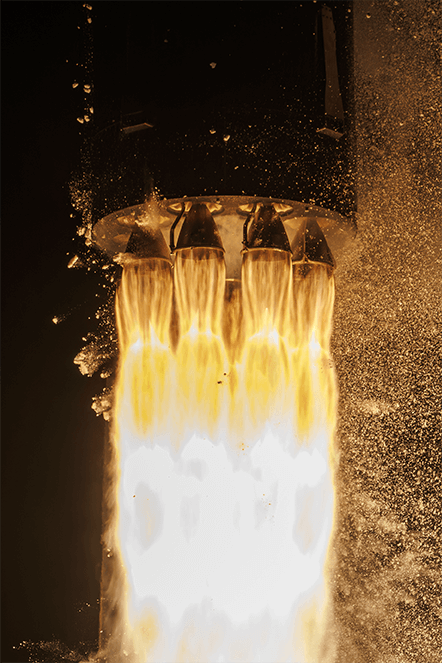
(Rocket Lab)
The timing of this success coincides with key strategic efforts recently announced. On December 5, the Trump Administration released the National Security Strategy which prioritizes investment to preserve and advance U.S. advantages in cutting-edge military and dual use technology. The NSS views hypersonics as crucial for future warfare, focusing on developing offensive strike capabilities, across domains, and layered defense systems against peer adversaries like China and Russia, who are already fielding these ultra-fast, maneuverable weapons.
Furthermore, in line with Secretary of War Pete Hegseth’s newly released Acquisition Transformation Strategy, which signals a strategic pivot to commercial first. The Cassowary Vex Mission demonstrates the cost and schedule savings that commercial launch vehicles can bring to the Missile Defense Agency test community for developmental testing, non-traditional targets testing, and risk-reduction payload testing activities.
As the Department’s only organization focused on accelerating the adoption of commercial and dual-use technology, DIU is uniquely positioned to address operational challenges at speed and scale. DIU remains well-positioned to ensure the DOW technology investments advance key cutting-edge capabilities, building on the mature pathways the organization has forged, including hypersonics, as part of the organization's ‘Emerging Technology’ portfolio.This portfolio, led by Lt. Col. Nicholas Estep, PhD, was established in May 2024, to focus on advancing initiatives derived from multi-disciplinary, deep-tech offerings from the commercial and non-traditional ecosystems.
Building on Mission Success
The Cassowary Vex Mission builds on the success of Prometheus Run, a collaboration between DIU and Missile Defense Agency (MDA), leveraging Rocket Lab’s HASTE launch vehicle on November 18. Led by MDA, the mission deployed one government-provided primary payload developed by the John Hopkins University Applied Physics Laboratory, and eight secondary payloads by federal and industry partners, at hypersonic speeds that tested tracking and interceptor technology for missile defense applications – a foundational basis for next-generation defense initiatives like Golden Dome for America.
The ‘Cassowary Vex Mission’ borrows its name from the cassowary, a large, powerful but flightless Australian bird serving as an ironic symbol for a hypersonic test team pushing the boundaries of flight, and a fitting emblem for a project developed in partnership with a company founded in Australia.